Institute for Protein Physics

Research Theme Overview


(A) Development and application of molecular design methods aimed at improving proteinproperties.

(B) Development and application of data analysis methods related to protein physical properties,


(A)  Development and application of molecular design methods aimed at improving protein properties.
We perform molecular design using rational or physical perturbation methods as follows:For details, please see "1-2 High functionality through physical perturbation methods" in "Moleculardesign of bio-nanomachines" (Kyoritsu Publishing).
(A.1) Molecular design for higher stability
(A.2) Molecular design for higher catalytic activity
(A.3) Molecular design for higher affinity.


(A.1) Molecular design for higher  stability
We design mutants with higher stability using structure-based rational or physicalperturbation methods.

(A.2) Molecular design for highercatalytic activity
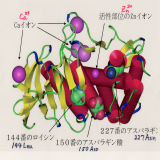
Based on the three-dimensional structure, we design proteins with higher catalytic activity by physical perturbation method.


(A.3) Molecular design for higher affinity
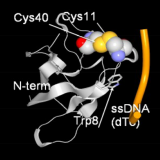
Molecular designs are performed to have
higher affinity by utilizing conformational
changes and multivalent bindings.


(B) Ddevelopment and application of data analysis methods related to protein physical properties.
We analyze data from calorimetry (DSC, ITC,PPC) and other methods to accurately evaluate the physical properties of proteins, such as:
(B.1) Evaluation of conformational changes and stability
(B.2) Evaluation of catalytic activity
(B.3) Evaluation of binding affinity

For an overview of the measurement method, please see the tutorial in Netsu Sokutei, the journal of Japanese Society of Calorimetry and Thermal Analysis.


(B.1) Evaluation of conformationalchanges and stability
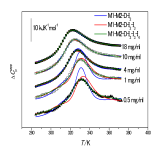
By analyzing data from DSC (differential scanning calorimetry) and IATC (acid titration calorimetry) usingequilibrium and kinetictheory, we evaluate the conformational changes and stability of proteins.

(B.2) Evaluation of catalytic activity
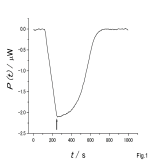
Catalytic activity is evaluated by assuming a kinetic model based on isothermal titration calorimetry (ITC) and various kinds of spectroscopic measurement data.


(B.3) Evaluation of binding affinity
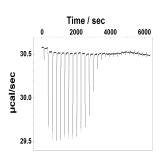
Based on ITC (isothermal titration calorimetry)
and various spectroscopic data, we use
equilibrium models to evaluate binding and
dissociation constants.